
India doubled its exports of smartphones to $11.1 billion (about Rs 91,000 crore) in 2022-23 (FY23) over the previous year's figure of $5.48 billion (Rs 45,000 crore), thanks largely to the Apple juggernaut, according to data from the India Cellular and Electronics Association (ICEA). Union Minister for Communications, Electronics & IT Ashwini Vaishnaw said: "With the doubling of exports of smartphones to over Rs 90,000 crore, India is well on its way to becoming a leader in the global mobile device market." On the flip side, despite the government prodding Chinese companies to export more, their smartphone shipments fell steeply by 26 per cent from $214 million in FY22 to $157 million in FY23.

India has become world's 2nd largest mobile phone: Modi

The rankings on the value are set to change. A role reversal is silently taking place in the Indian consumer durable business landscape. LG, which has built a huge reputation and amassed a significant market share on the back of affordable pricing, is consciously promoting higher end products. The Korean company has undertaken a strategic initiative to position itself as a maker of premium consumer electronics.

The way video is being watched and monetised is changing. This is the first thing that stands out as the penetration of smart TVs continues to rise.

Zetwerk is not exactly a household name, but this unicorn, boasting revenues of Rs 11,450 crore as of last year, is among the top four electronics manufacturers in India. The startup is capitalising on a notable trend in smart TV sales - fall in collective shipments from top brands like Xiaomi, Samsung, LG and an uptick in the market share of smaller, regional, and online brands. Emerging as a key Electronics Manufacturing Services (EMS) player, Zetwerk operates a plant in Haryana that caters to 10 per cent of the country's overall smart TV production capacity.

Starting with a family, which had a dealership of Bajaj Auto's scooters, to becoming the owner of a household name in consumer appliances who could afford to have Bollywood superstar Shah Rukh Khan as the brand ambassador, Venugopal Dhoot's is a story of an aggressive small town businessman's pursuit to be on the top. Now arrested in connection with the ICICI Bank loan fraud case, Venugopal Dhoot during his heydays was not the one to simply sit on small achievements like Videocon becoming the largest television set manufacturer in India.

The addition of a mobile payments service to Apple Inc's next iPhone could help to boost sales of the larger-screen phones and claw back market share lost to mobiles running on Google Inc's Android platform.

On Sept 15 Google launched the first of its Android One phones in India aimed at making smartphones more affordable for the masses.

It was not immediately known how many jobs the proposed new plants would eventually create.
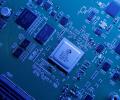
India and Vietnam are vying with each other to woo semiconductor companies to their country. With the tension between the US and China escalating, and Taiwan getting vulnerable both countries are trying to present themselves as alternative destinations for global players. Vietnam, which started the effort as early as 2010, has got a leg-up after US President Joe Biden's visit last month.

As part of its expansion plans, Jio has announced the roll-out of Internet of Things (IoT) services in association with Samsung, which will help consumers and enterprises.

Prime Minister Narendra Modi, speaking at the India Mobile Congress in New Delhi on Friday reeled out statistics to show how India has turned into an exporter of mobile phones from being an importer and how big tech companies -- from Apple to Google -- are lining up to become manufacturers in the country. He said after the fastest rollout of 5G mobile telephony services, India will lead the world on 6G. Recalling the launch of 5G technology in the country on October 1, 2022, he remarked that within a year there are about 5 lakh 5G base stations across the country.

While consumer electronics, technology, mobile phones, auto and sports-wear categories dominate the top 20, FMCG has only one entry in the list

If you have an IT firm, you should avoid encroaching on their turf.

A sojourn in Seoul, one of Asia's largest metropolises, where the ultra-modern coexists with the ancient -- temples and palaces with futuristic skyscrapers climbing to the stratosphere, K-pop with Buddhism, a village within city limits.

Shares of the company rose more than 1 percent to $99.44 in heavy trading.

Micron plans an assembly testing, marking and packaging project of $1 billion, and talks are on to set up a memory chip plant for captive requirements.

In the late 1990s, Japanese electronics brand Aiwa tied up with a maverick entrepreneur, Kabir Mulchandani, to sell its consumer electronic products. Founder of Baron International, Mulchandani, all of 26 at that time, had already disrupted the television market through a tie-up with another Japanese player, Akai. With a strategy that relied on heavy discounts, exchange offers and freebies, Akai was selling in huge volumes.
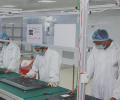
The stock of Dixon Technologies (India), the country's largest listed electronic manufacturing services (EMS) player, was up 6 per cent in 10 trading sessions, boosting the gains over the last three months to 21 per cent. The gains came following reports that Dixon will produce laptops in India in partnership with US and Chinese firms under the production-linked investment (PLI) scheme. It recently signed an agreement to make smartphones for Xiaomi India.

Foxconn has said it is aiming to develop 10-12 facilities in India, including factories and data centres, by 2020

Top companies across sectors -- automobile maker Maruti Suzuki, consumer electronics giant Samsung to IT giant Infosys -- have reopened factories and offices as India took its first steps towards resuming economic activity after weeks under a near-total coronavirus lockdown.

The government on Thursday tweaked curbs on imports of laptops and computers as it allowed importers to bring in shipments of IT hardware from overseas on a mere 'authorisation' upon detailing quantity and value. The new 'import management system' is aimed at monitoring shipments of laptops, tablets and computers into the country without hurting market supply or creating a cumbersome licensing regime. The announcement is likely to provide relief to companies in the IT hardware segment in India as they had flagged concerns over the imposition of a strict licensing regime for importers.

With some of the world's most amazing gadgets, the 2015 International CES kicked off on January 6 promising a fantastic show with more than 3,600 exhibitors.

Apple has said the watch will launch in April

E-commerce major Amazon will host Prime Day - its annual sale event - in India on July 15-16. The company will launch over 45,000 products from over 400 Indian and global brands. The announcement of the Prime Day event in India comes at a time when 900 workers at Amazon UK plan to strike for three days (July 11-13).

The government is likely to extend fiscal incentives for production of toys, bicycles and leather and footwear in the forthcoming budget as it looks to expand production linked incentive (PLI) scheme to cover more high-employment potential sectors, sources said. The government has already rolled out the scheme with an outlay of about Rs 2 lakh crore for as many as 14 sectors, including automobiles and auto components, white goods, pharma, textiles, food products, high efficiency solar PV modules, advance chemistry cell and speciality steel. The scheme aims to make domestic manufacturing globally competitive and create global champions in manufacturing, and it is yielding solid results, sources said.

Billionaire Mukesh Ambani's Reliance Jio is India's strongest telecom brand in India, ahead of Bharti Airtel and Vodafone Idea Ltd, according to brand intelligence and data insights company TRA. TRA, formerly Trust Research Advisory, in its 'India's Most Desired Brands 2022' ranked companies according to their brand strength. Reliance Jio topped the telecom category, followed by Bharti Airtel, Vodafone Idea Ltd and BSNL.

India is all set to make its presence felt in the $47 billion global outsourced semiconductor testing and packaging market, an arena where Malaysia and Vietnam have been way ahead so far. The Cabinet last Thursday cleared two projects, the Tata's assembly testing and packaging plant (ATMP) and the Murugappa-owned CG Power with Renesas from Japan as its tech partner. These, together with Micron's assembly and testing plant which is already being constructed in Sanad in Gujarat, will collectively invest Rs 47,300 crore to set up the factories.

Xiaomi Inc said it had upgraded its operating system to ensure users knew it was collecting data from their address books after a report by a computer security firm said the Chinese budgetsmartphone maker was taking personal data without permission.
The exclusive club that dominates the global semiconductor fab scenario is about to get a new member. Taiwan, South Korea, and China control nearly 70 per cent of the global capacity. SEMI, the global industry body for semiconductor and electronics design and manufacturing, projects all fabs collectively will churn out 30 million wafers a month this year.

It might give Apple a boost in the fast-growing Indian, Middle East and African markets but also risks cutting its average phone prices and profit margins

Apple Inc and Google Inc's Motorola Mobility unit have agreed to settle all patent litigation between them over smartphones, ending one of the highest-profile lawsuits in technology.

The Ambanis are the only Indian family on the top 10 richest families list in Asia.

most believed that Apple could have done more to enhance the battery life of the phones.
Estimates suggest subsidy outgo on these proposals would be at least Rs 1,000 crore

Walmart CEO Douglas McMillon came first in the CEOWORLD magazine's global ranking of the best chief executives across all industries for 2019.

The government on Monday extended the period of production-linked incentive scheme for large-scale electronics manufacturing with a focus on mobile phones by a year until 2025-26. The base year of the scheme 2019-20 remains the same but the companies will have the option to choose their five-year period either from the base year or the year 2020-21 for calculation of the incentives under the scheme. "Now we have extended the tenure of the scheme from 2020-21 to 2025-26. "Earlier, it would have ended in 2024-25.

The finance ministry is looking at a reworked proposal from mobile device makers on how to fight the rampant and growing smuggling of very high end phones. The proposal suggests reducing the basic customs duty (BCD) on phones which have a CIF (cost, insurance and freight or price at landing in the port) value of over Rs 35,000-Rs 40,000. The retail value of these phones is upwards of Rs 70,000.

Apple and Samsung are international players and should work as a team with domestic companies to transform India into a global powerhouse: IT Minister Ravi Shankar Prasad.
Foundries in Taiwan account for more than 75 per cent of the chips that mobile devices made in India need, according to estimates by the Indian Cellular and Electronics Association (ICEA), which represents global and domestic manufacturers. The number is slightly lower, 60 per cent, if one considers all chips -- those of consumer electronics, PCs, laptops, autos, etc. This ties in with the fact that foundries in Taiwan, led by TSMC, account for over 70 per cent of the world's microchip supply, according to estimates by Gartner.
